Choosing the Right Wood Species for Your Project
Choosing the Right Wood Species for Your Project
Choosing wood is about more than finding a colour you like. The species affects how a project looks, how well it handles wear and moisture, how easy it is to work with, and how much it costs. A wood specie that performs beautifully for a dining table may be a poor choice for a garden bench; a species that suits detailed carving may not be strong enough for a structural beam.
Start with the conditions the finished piece will face, then consider appearance, workability, availability, and budget. You do not need to know every kind of wood to make a good choice. A few practical questions can narrow the options quickly.
Begin with the project’s purpose
First, decide what the wood needs to do. Is it carrying weight, taking frequent knocks, standing outdoors, or serving mainly as a decorative surface? For furniture and flooring, hardness and resistance to dents may matter most. For shelving or framing, strength, stability, and the dimensions available may be more important. For carving or fine joinery, predictable grain and ease of cutting can save time.
Also think about the environment. Indoor wood is generally protected from rain and direct sun, while outdoor wood must withstand wetting and drying, heat, insects, and fungal decay. A species that lasts for decades indoors may deteriorate quickly outside if it is not naturally durable or properly protected.
Understand hardwoods and softwoods
The names “hardwood” and “softwood” refer to botanical groups, not a simple measure of hardness. Many hardwoods, such as oak and maple, are dense and tough, but some are relatively easy to dent. Some softwoods, including certain pines, are soft and lightweight; others can be strong and suitable for structural work.
Use the distinction as a starting point, not a guarantee. Check the qualities of the specific species and grade you are considering. Wood can also vary within a species: growth conditions, sawing method, and drying all affect its appearance and performance.
Match durability to use
For surfaces that see heavy use, e.g. floors, tabletops, workbenches, or kitchen counters, look for good resistance to denting and wear. Oak and maple are popular choices, though each has a distinct appearance and can be challenging to work in some applications. Walnut is valued for furniture and cabinetry, with rich colour and good workability, but it is often more expensive and may show wear sooner than harder alternatives.
For outdoor projects, prioritize resistance to decay and insects. Teak, cedar, and some tropical hardwoods are commonly used outdoors, but availability, price, and responsible sourcing vary. Treated pine can be a cost-effective option for structures such as posts and decking, provided the treatment is appropriate for the intended use and the wood is installed correctly. No species is maintenance-free: finishes, drainage, ventilation, and good construction details all help extend lifespan.
Consider stability and moisture
Wood expands and contracts as its moisture content changes. This movement can cause gaps, cupping, warping, or cracked joints if the design does not allow for the movement. Stable, properly dried timber is especially important for doors, wide panels, cabinetry, flooring, and fine joinery.
Ask whether the wood has been kiln-dried or air-dried and whether it is suitable for the room or climate where the project will be used. Indoor heating, air conditioning, coastal humidity, and seasonal changes can all affect movement. Wider boards show movement more clearly than narrow pieces, so a panel made from several narrower boards may be safer than a single broad slab. Good design cannot stop wood from moving, but it can accommodate that movement.
Choose an appearance that suits the design
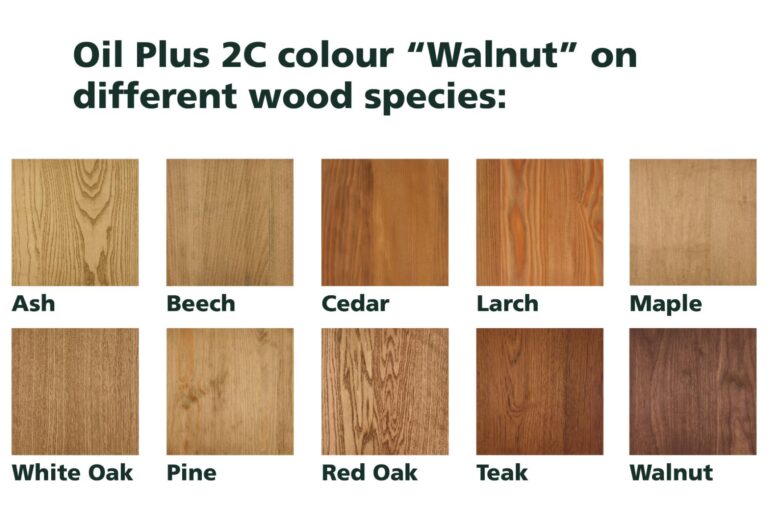
Wood varies in colour, grain, texture, and figure. Oak often has a pronounced grain that works well in traditional or rustic designs. Maple is usually paler, with a more subtle grain that suits clean, modern surfaces. Walnut has deep brown tones and can bring warmth to furniture. Cherry tends to darken with exposure to light. Pine may show plenty of knots and colour variation.
Do not judge a species from one small sample alone. Boards from the same tree can look different, and stain can alter colour unevenly, especially on woods with contrasting grain or density. If the finished project will use several boards, inspect enough material to understand its range. Test the intended finish on an offcut, and remember that oils, and stains will change the wood’s appearance.
Think about workability
A species that is easy to find may still be awkward to build with. Dense or interlocked grain can blunt tools, resist sanding, or tear out during planing. Softer woods are easier to cut but can dent, split, or crush around fasteners. Some species contain resin or natural oils that complicate gluing and finishing.
If you are working by hand, using small machines, or building your first project, choose a predictable species that suits your tools and skills. Pine, poplar, and many types of maple are commonly used for interior projects, though each has different trade-offs. For intricate joinery or detailed carving, a consistent grain can make the work easier. Always test cuts, drilling, glue, and finish on scraps before committing expensive boards.
Balance cost, availability, and sourcing
The purchase price is only part of the cost. Account for waste, finishing, hardware, tool wear, and the time required to work difficult wood. An inexpensive board may be costly if it is warped or full of defects; a pricier, stable board may reduce rework and produce a better result.
Availability varies by region, and local species can be a practical, attractive alternative to imported timber. Ask a reputable supplier about grading, drying, intended use, and the origin of the wood. For tropical or rare species, look for credible documentation of legal and responsible sourcing. Reclaimed timber can offer character and make use of existing material, but inspect it for hidden metal, rot, pests, and previous treatments before cutting or sanding.
Make the decision with a shortlist
Once you know the project’s demands, compare two or three species rather than trying to evaluate every option. For each, consider durability, stability, appearance, workability, price, and local availability. Make sure the grade and board condition are suitable, and buy a sample or inspect the stock when possible.
There is rarely one perfect species. A good choice meets the project’s practical needs while delivering the look, feel, and budget you want. If you match the wood to its environment, plan for natural movement, and check the material before building, your finished project is more likely to serve you well for years.