White Oak vs Red oak
White Oak vS Red oak
White oak and red oak are both versatile hardwoods, but they differ in colour, grain, moisture resistance, and price. Red oak can be a practical, less expensive alternative when you want an oak look, and with the right finish, you can move its colour closer to white oak.
Main differences
- Ageing: White oak usually starts light beige to brown and tends to mellow or amber with light and time. Red oak often has pink or reddish tones that can become more pronounced under some clear finishes.
- Workability: Both machine and finish well. Red oak is generally straightforward to saw, sand, and glue, though its open grain can take stain unevenly without careful preparation. White oak is also workable, but its density and tyloses-filled pores can make it somewhat tougher to machine and finish.
- Price: White oak is often more expensive, though local supply, grade, board width, and market conditions affect the difference. Compare prices from local suppliers before deciding.
- Common uses: White oak is widely used for furniture, flooring, cabinetry, and doors where its durability and resistance to moisture are useful. Red oak is common in furniture, flooring, trim, cabinets, and interior joinery.
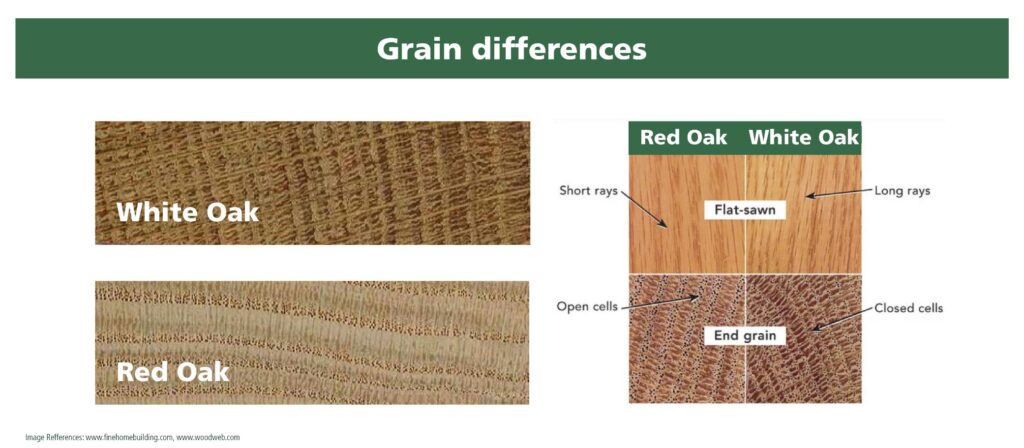
- End grain: Both have large pores. In white oak, pores are often blocked by tyloses, which help limit liquid movement through the wood. Red oak’s pores are generally more open, allowing liquid to pass through more readily. This is one reason white oak is often preferred for applications involving moisture.
- Look and feel: White oak typically has a light tan to brown colour, a more subdued warmth, and prominent grain that can appear straight or cathedral-shaped. Red oak often looks pinker or redder, with a similarly strong, open grain. Both feel substantial; the finish and cut can make as much difference to the final look as the species.
Can red oak substitute for white oak?
For many indoor projects, yes. Red oak can be a good substitute when you want the strength and visible grain of oak at a lower material cost. It is not identical to white oak: the grain and underlying colour remain different, and it does not offer the same pore structure for moisture resistance. Choose white oak where that performance difference matters, especially in wet moisture areas.
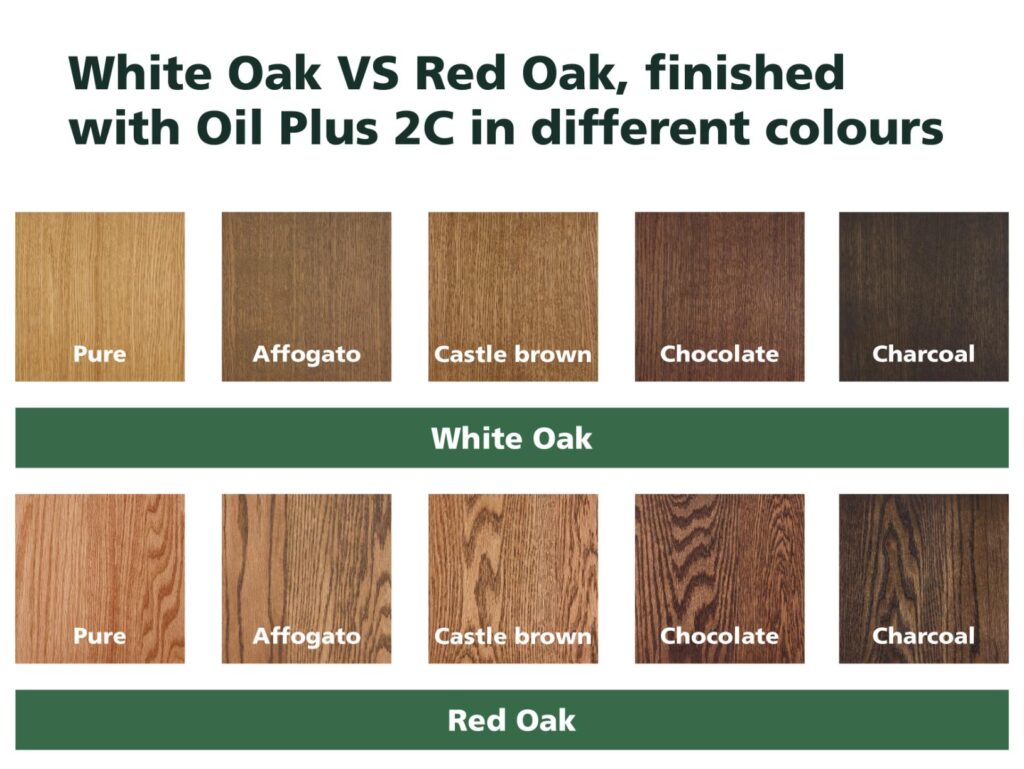
To bring red oak closer to a white oak appearance, you can opt for applying the Rubio Monocoat PreColour colour ‘Neutral White’ to help neutralize the pink and red undertones, followed by the Oil Plus 2C for protection. Use White 5% for a more natural-looking finish. *PreColour is a pre-treatment, so it needs the protective finish Oil Plus 2C. Test the complete process on an offcut from the same stock, since the result varies with the wood and preparation.
With the PreColour/Oil Plus 2C finish, red oak can offer a more affordable route to a lighter, less reddish oak look.